Origins
Number Forty-Nine
In Britain, The Doors were a minor act who never had a hit while Jim Morrison was alive. Their highest UK chart placing came twenty years after he died. This is the story of a band the British took seriously only once they were safely historical — and then built half of post-punk out of.
Words by Michele Harding · 19 September 2026
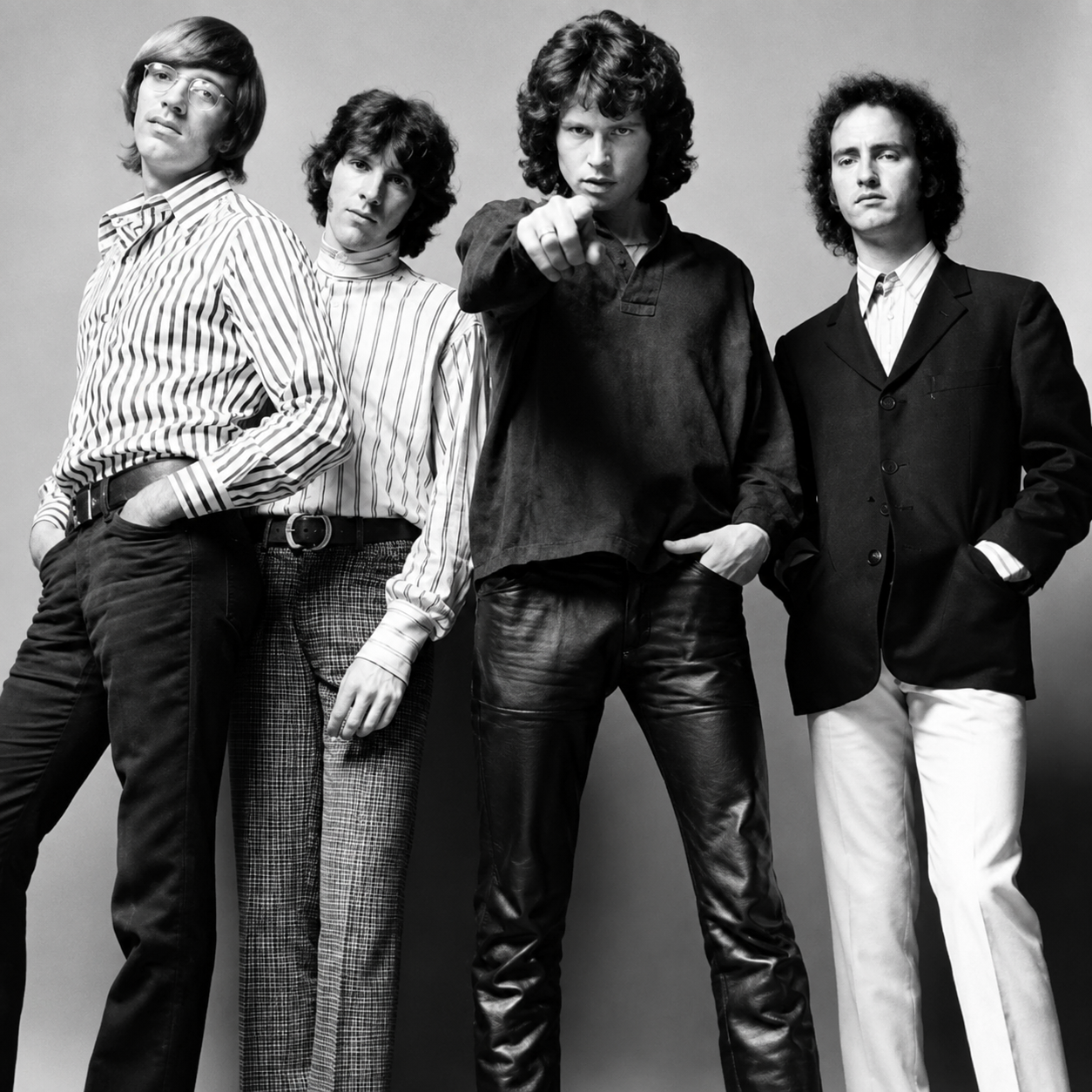
"Light My Fire" reached number forty-nine in Britain.
That was 1967, the year it went to number one in America and became the record that defined a Californian summer. In the United Kingdom it scraped into the bottom third of the chart and disappeared.
The same song reached number seven in the UK in 1991, reissued in the wake of Oliver Stone's film. Jim Morrison had been dead for twenty years.
That gap — between what Britain thought of The Doors at the time and what Britain made of them afterwards — is the whole story, and it is the reason an American band who split in 1973 belongs in an archive of British independent music.
A beach in Santa Monica
In July 1965, two graduates of the UCLA film school ran into each other on a beach near Santa Monica. Ray Manzarek asked Jim Morrison what he had been doing. Morrison said he had been writing songs, and sang him the opening lines of one called "Moonlight Drive."
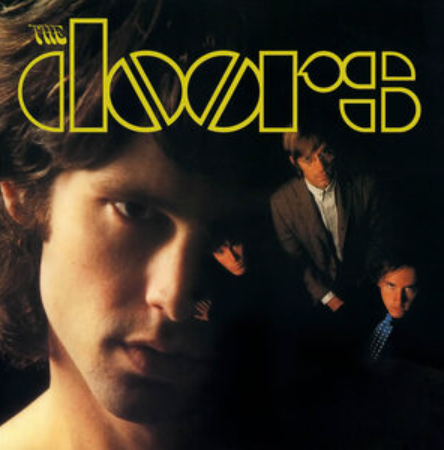
Manzarek heard an arrangement immediately. John Densmore, whom he knew from a meditation class, came in on drums in August. Robby Krieger joined on guitar late in the year. They took their name from Aldous Huxley's The Doors of Perception, which had taken its own from William Blake.
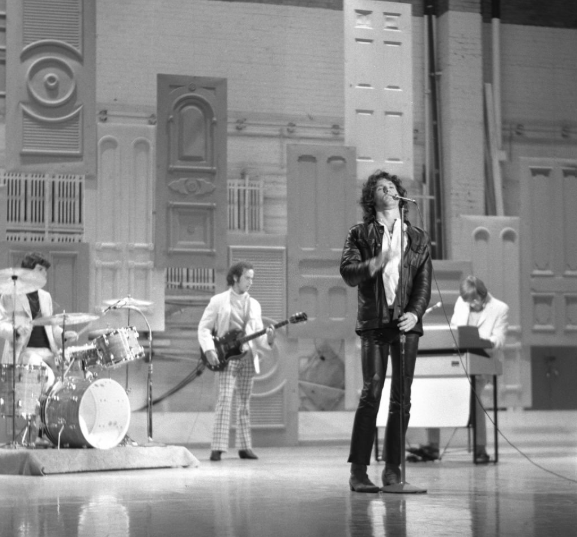
The detail that matters most is the one people forget: they had no bass player. Manzarek covered the bass parts live with his left hand on a Fender Rhodes keyboard bass, while his right played a Vox Continental organ. Session players filled in on the records, but on stage the band was a four-piece with a hole where the bottom end should be, plugged by a keyboard.
That arrangement has consequences. It makes the organ load-bearing rather than decorative — the instrument carrying the floor of the song rather than colouring it. Any British band who later built around a keyboard doing structural work rather than ornament was, knowingly or not, using an idea The Doors had been forced into by circumstance.
Three days
They became the house band at the Whisky a Go Go in May 1966. On 18 August, Elektra's Jac Holzman signed them.
On 21 August they were fired, after Morrison performed the Oedipal section of "The End" in full.
Three days between a record contract and the sack. It is a useful corrective to the idea of Morrison as a calculating self-mythologiser: at the moment the band finally had something to lose, he did the thing most likely to lose it.
The pattern held. On 17 September 1967 they played "Light My Fire" on The Ed Sullivan Show. Producers had asked them to change the line about getting higher; the band agreed in rehearsal and sang the original on air. Sullivan declined to shake Morrison's hand. They were never invited back.
Britain, politely unmoved
Set against the story Britain now tells about The Doors, their actual British chart record is startling.
The debut album reached forty-three. Waiting for the Sun managed sixteen, Morrison Hotel twelve, L.A. Woman twenty-eight. "Hello, I Love You" got to fifteen, "Riders on the Storm" to twenty-two, "People Are Strange" nowhere at all. They never had a UK number one single, and in Morrison's lifetime they never had a UK top ten.
Britain in 1967 had its own psychedelia and did not particularly need an imported version. The Doors arrived as a slightly lurid American curiosity, and left the same way.
Morrison died in Paris on 3 July 1971, aged twenty-seven. There was no autopsy; the cause was recorded as heart failure. The remaining three made two more albums and stopped in 1973.
The afterlife starts at the cinema
In 1979, Francis Ford Coppola put "The End" over the opening of Apocalypse Now — a napalm strike, helicopters, a ceiling fan.
The connection was not an accident of taste. Coppola had been at UCLA film school at the same time as Morrison and Manzarek. By his own account the idea arrived sideways: visiting an editing suite, spotting discarded footage beside a stack of records that included the first Doors album, and joking that it would be funny to put a song called "The End" at the beginning. The band gave him the original four-track masters.
A generation of British teenagers who had never heard of the group met them in a cinema, eight years after the singer had died, attached to the most oppressive opening sequence in American film. That is when Britain started paying attention.
Liverpool
It landed hardest in one city.
Eric's Club on Mathew Street produced, among others, the Crucial Three — Ian McCulloch, Julian Cope and Pete Wylie — a band that existed for about six weeks in 1977 and never got past rehearsals, but whose three members went on to Echo and the Bunnymen, the Teardrop Explodes and Wah!. McCulloch founded the Bunnymen in October 1978 with Will Sergeant, Les Pattinson and a drum machine, and made their live debut at Eric's the following month. The Doors sit openly among his stated influences, and anyone who has watched McCulloch perform has watched a man who worked out what to do with a microphone stand by studying Jim Morrison.
Then the loop closes properly. In 1987 Echo and the Bunnymen recorded "People Are Strange" for The Lost Boys. The producer was Ray Manzarek. Released as a single, it reached twenty-nine in the UK in February 1988.
A Doors keyboard player produced a Liverpool post-punk band covering a Doors song, and the cover outcharted the original in Britain, where the original had not charted at all.
The Bradford ending
The strangest chapter is the last one.
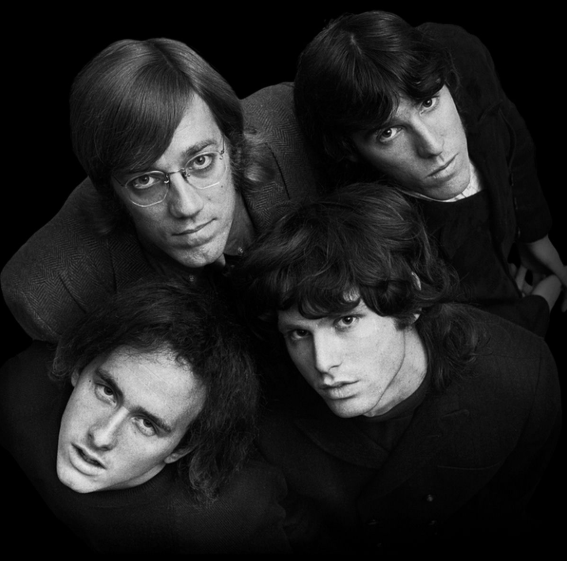
In 2002, Manzarek and Krieger went back out on the road as The Doors of the 21st Century, with Ian Astbury of The Cult singing. Densmore and the Morrison estate sued over the use of the name and won; the band carried on as Manzarek–Krieger until Manzarek's death from cancer in May 2013.
So for roughly a decade, two-thirds of the surviving Doors toured the world fronted by a goth singer from Bradford. The influence had run in a full circle: an American band shaped British post-punk, and British post-punk supplied the voice the American band used to keep going.
What actually transferred
Not the songs. British indie produced very few Doors imitators, and the ones it did produce have not aged kindly.
What crossed the Atlantic was a set of postures and permissions. The frontman as something other than an entertainer — declamatory, humourless, faintly ridiculous and entirely committed, which is the exact register of Ian McCulloch and Ian Astbury and half the singers in every black-clad band of the early eighties. The keyboard as a structural instrument. The long form — the idea that a song could run past seven minutes without being progressive rock. And a certain literary self-seriousness: a band named after a Huxley book named after a Blake line, taking itself at least as seriously as its audience did.
Britain gave The Doors almost nothing while they existed: number forty-nine, no top ten, a polite shrug. Then it spent the next two decades quietly taking them apart for components.
That is a pattern worth noticing, because this archive documents it happening again and again. The Velvet Underground sold badly and reshaped everything. The Stooges peaked at 183. The Wedding Present never had a top ten single. What a country buys and what it is influenced by turn out to be almost entirely separate questions.
Their surviving members spent the 2000s touring with a Bradford goth singer at the microphone.