The indie4me long read
Sixteen Years an Overnight Success
Pulp recorded a John Peel session in 1981 and did not have a hit until 1994. The story of the longest apprenticeship in British pop — and of a band who got famous for being patient.
Words by Michele Harding · 19 September 2026
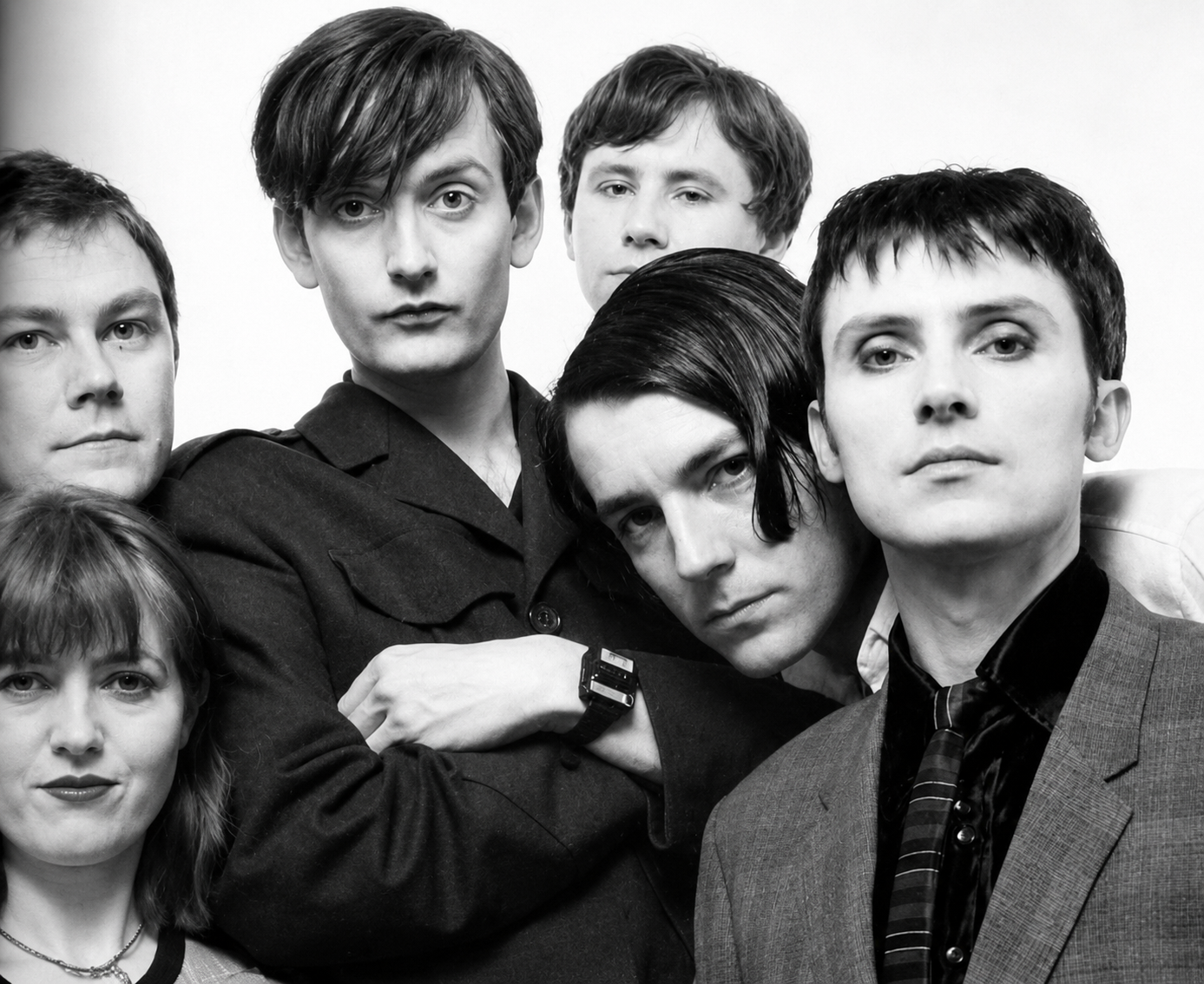
On the evening of 18 November 1981, an eighteen-year-old from Sheffield lay in a dormitory at Oxford University with a radio smuggled under the covers, turned down almost to nothing so as not to wake the other candidates.
He was there for an interview. On the radio was John Peel, broadcasting a session recorded eleven days earlier by his band. Jarvis Cocker failed the interview. He decided to become a musician instead.
It would be thirteen years before Pulp had a hit.
A coffee bean in the Financial Times
Pulp began in 1978 at the City School in Sheffield, formed by Cocker, then fifteen, and his friend Peter Dalton, fourteen. The name came from a commodities listing in the Financial Times: Arabicus Pulp, a reference to coffee beans. They shortened it, sensibly.
Their first proper gig was at Rotherham Arts Centre in July 1980. Their early sound has been described as a cross between ABBA and The Fall, which is both unhelpful and, if you listen to the surviving recordings, roughly accurate.
Then came the piece of luck that shaped the next four decades. John Peel came to Sheffield for a roadshow, and Cocker walked up and handed him a demo tape. Five days later, Peel's producer John Walters telephoned and invited them to record a session.
That name is worth pausing on. Walters is the same producer who found The Wedding Present at a London University gig, and who — by Morrissey's own account — was the reason Peel ever encountered The Smiths at all. Three of the defining British indie bands reached the nation's most important radio programme through the ears of the same man.
Four tracks, a hired van, and a burglar alarm
The session was recorded at BBC Maida Vale Studio 4 on 7 November 1981. Pulp had no record deal, no manager and no money. They borrowed equipment and drove to London in a hired van. Cocker was eighteen. The drummer, Wayne Furniss, was fifteen.
The engineer was Dale Griffin, formerly the drummer of Mott the Hoople, and by most accounts he found the whole experience trying — not least Furniss's homemade electronic drum, which had been assembled from a burglar alarm pressure mat and a pocket calculator.
They recorded four songs. Cocker's own sleeve notes capture what it meant: "this was our chance to be on the show that had been forming our whole musical outlook for the last 4 years!"
And then nothing happened at all.
Pulp did not record a second Peel session until 1993 — a gap of nearly twelve years, believed to be the longest between a band's first and second sessions in the programme's history. Peel's endorsement, which launched so many careers within months, launched this one after more than a decade.
The wilderness
What followed is the least glamorous decade in British music.
It, a mini-album of folkish, Leonard Cohen-ish songs, appeared on Red Rhino in April 1983 and went nowhere. Candida Doyle joined on keyboards in 1984 after a London pub gig. Freaks followed on Fire Records in 1987, recorded in a single week on a budget of £600. The label did little with it. Members came and went. Cocker was, by this point, in his mid-twenties, in a band that had been going for nine years, with nothing to show for it.
In November 1985 he fell out of a window. The full account is that he was attempting to impress a girl with a Spider-Man impression. He was hospitalised, and spent a long recovery performing from a wheelchair, which he incorporated into the act because there was nothing else to be done.
In 1988, at twenty-five, he effectively gave up — leaving Sheffield to study Fine Art and Film at Saint Martin's School of Art in London. Guitarist Russell Senior talked him into keeping the band alive on the side. Steve Mackey joined on bass. They recorded an album, Separations, in 1989. Fire Records did not release it until 1992.
Read that again: a record finished in 1989 and released three years later, by which time the band who made it had moved on twice.
But Saint Martins is where the decade paid off. In a college bar, Cocker met a Greek art student who told him she wanted to move to Hackney and live like common people. He kept the phrase.
Everything at once
Island Records extracted Pulp from their Fire contract in 1992. His 'n' Hers reached number nine in 1994 and was nominated for the Mercury Prize. And then 1995 happened.
"Common People" was built from a melody Cocker worked out on a Casiotone MT-500 keyboard bought in Notting Hill. Most of the band were unimpressed; Candida Doyle was the one who insisted it was powerful precisely because it was simple. Chris Thomas produced it at the Town House over a fortnight, filling all forty-eight available tracks with keyboards, guitars and, somewhere in there, a Stylophone.
It reached number two. It sat there for two weeks and could not get past Robson and Jerome's "Unchained Melody" — an accident of chart history so perfectly British that it barely needs commentary.
Different Class entered the album chart at number one in October 1995 and won the Mercury Prize the following September. "Sorted for E's & Wizz" and "Mis-Shapes" went to number two as a double A-side; "Disco 2000" reached seven, "Something Changed" ten.
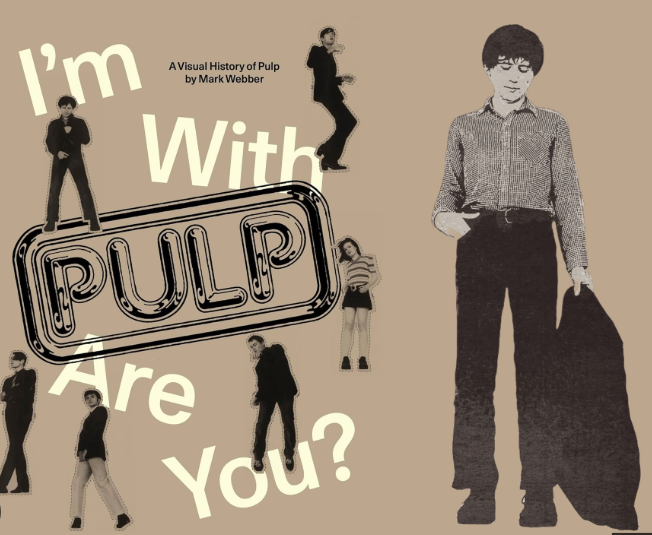
One line-up note deserves recording for the archive, because it is the most indie thing that has ever happened: Mark Webber, who became a permanent member of Pulp around Different Class, had previously been the president of their fan club.
Twenty seconds at the Brits
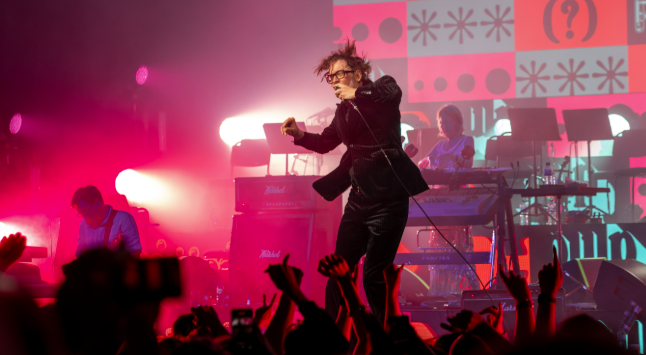
In February 1996, during Michael Jackson's performance at the BRIT Awards, Cocker walked onto the stage and waggled his backside at the audience.
He was arrested on suspicion of assault involving the child performers on stage and released without charge. His solicitor was Bob Mortimer, the comedian, who had qualified in law before becoming famous. The NME called it creative, subversive and very, very funny. Sales went up. A man who had spent seventeen years being ignored became, in about twenty seconds, one of the most recognisable people in the country.
What fame did
The record that followed is the interesting one. This Is Hardcore (March 1998) also entered at number one, but it is a cold, ugly, brilliant album about celebrity, pornography, ageing and the comedown — the sound of a man who got exactly what he wanted at thirty-two and found it unpleasant. Russell Senior had already left.
We Love Life followed in 2001, produced by Scott Walker, and sold modestly. A greatest hits appeared in 2002, and the band quietly stopped, playing their last show of the original era at Magna in Rotherham — a former steelworks converted into a science centre, which is as neat a summary of what happened to South Yorkshire as any lyric.
More
They reunited in 2011 for festivals. They came back again in 2022.
Steve Mackey died in March 2023, aged 56, before the reunion shows he had helped set in motion.
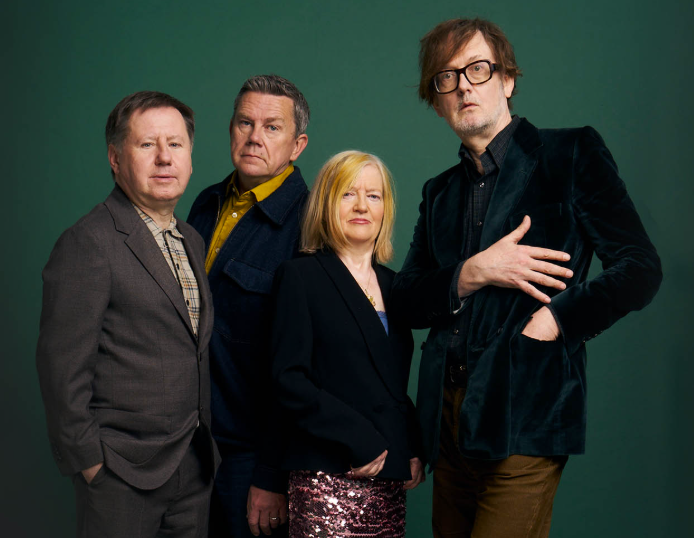
In December 2024 Pulp signed to Rough Trade — the label that, forty years earlier, had put out "Hand in Glove." More was released on 6 June 2025 and went to number one, their first chart-topping album since This Is Hardcore twenty-seven years before. They played the Pyramid Stage at Glastonbury that month, thirty years after their first headline slot there — the one they took at short notice in 1995 when the Stone Roses dropped out.
Jarvis Cocker was born on 19 September 1963. He turns 63 today.
The lesson, if there is one
Every band in this archive that made it looks inevitable in retrospect. Pulp are the corrective. They were not discovered, they were not championed into success, and their break did not come from the Peel session that should have provided it. They simply did not stop — through a decade of indifference, a broken body, a label that sat on their record for three years, and a frontman who went to art school because the band plainly wasn't working.
Sixteen years from the school band to the hit. Then a number one album thirty years after that.
Sources
Twelve years passed between Pulp's first Peel session and their second. It is thought to be the longest such gap in the programme's history.