Origins
The Conduit
He had the Velvet Underground before Britain could buy them, mixed the Stooges, produced Lou Reed and saved Mott the Hoople from breaking up — all in about eighteen months. What British indie took from David Bowie was never the costumes.
Words by Michele Harding · 19 September 2026
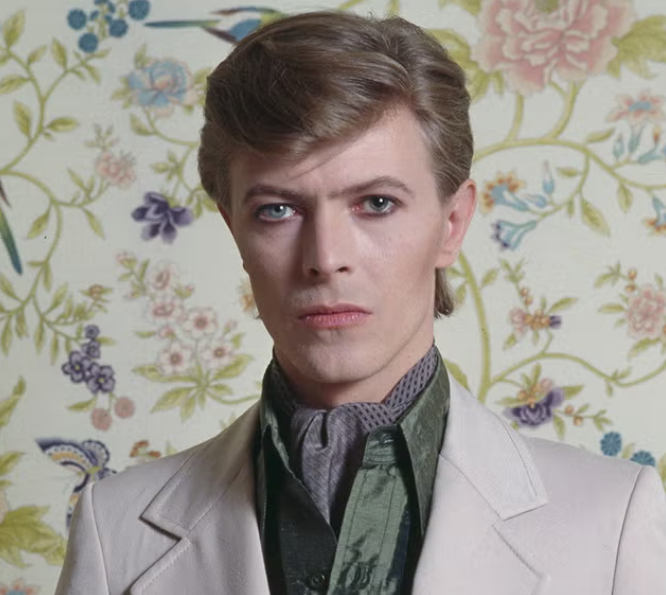
At about twenty past nine on the evening of 5 July 1972, in Studio 8 at BBC Television Centre in Shepherd's Bush, a 25-year-old man recorded three minutes and fifty-five seconds of television. It was broadcast the following night on Top of the Pops.
Two things happened in it. During the chorus, David Bowie draped his arm around his guitarist Mick Ronson's shoulders — casually, proprietorially — and did it again in the second chorus. And in the second verse he pointed down the barrel of the camera, directly at whoever was watching.
Whoever was watching, it turns out, included most of the people who would go on to build British independent music.
Robert Smith: "I immediately put on some of my older sister's make-up. I loved how odd it made me look, and the fact that it upset people." Siouxsie Sioux: "That ambiguous sexuality was so bold and futuristic that it made the traditional male/female role-play thing seem so out-dated." Gary Numan, already a committed T. Rex fan: "To say it stood out is an epic understatement." And Ian McCulloch of Echo and the Bunnymen, who put it most plainly: "The Top Of The Pops performance changed lives. In 1972, I'd get girls on the bus saying to me, 'Eh la, have you got lippy on?'"
There is no other single broadcast in British pop that produces this density of testimony. But the performance is the famous part, and the famous part is not the most useful part. To understand what Bowie actually did for the music this archive documents, you have to look at the decade before it and the eighteen months after it.
Ten years of not working
Bowie's career begins in 1962 with a band called the Konrads. Then the King Bees. Then the Manish Boys. Then the Lower Third. He changed his name to David Bowie in 1966 and released records that did nothing at all.
In 1967 he put out a novelty single called "The Laughing Gnome" and a self-titled album. Both failed. It was his last release for two years.
"Space Oddity" finally reached the UK top five in 1969, timed for the Apollo 11 launch — and then nothing again. It was, as his own biography puts it, his first and last hit for three years.
So the man who walked into Studio 8 in July 1972 had been trying, publicly and unsuccessfully, for a decade. That is worth holding onto, because it is the same shape as the Pulp story elsewhere in this archive, and the Wedding Present's, and almost every other career here. Britain's independent tradition is built by people who kept going long past the point where stopping would have been reasonable.
The importer
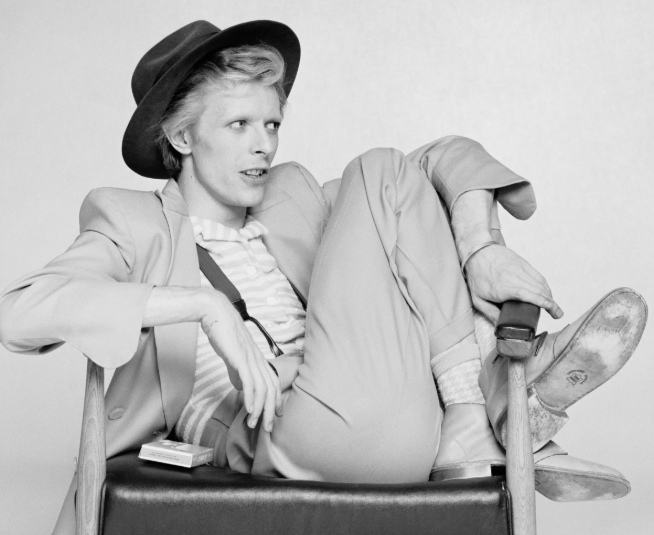
Before Bowie was an influence, he was a conduit — and this is the part that belongs specifically on a British site.
In November 1966, his manager Kenneth Pitt went to New York on business, visited Andy Warhol's Factory, and came home with an acetate of an album that had not yet been released. He gave it to his client. That December, Bowie had his band Buzz play "I'm Waiting for the Man" as an encore.
A group in London was performing Velvet Underground songs before anybody in America could buy the record. Bowie later described the music as having "a degree of cool that I had no idea was humanly sustainable."
That is the pattern for everything that followed. Bowie's great function in the early 1970s was not originality. It was transmission: he found what was happening in the American underground, understood it faster than anyone else in Britain, and then physically carried it home.
Eighteen months of giving it away
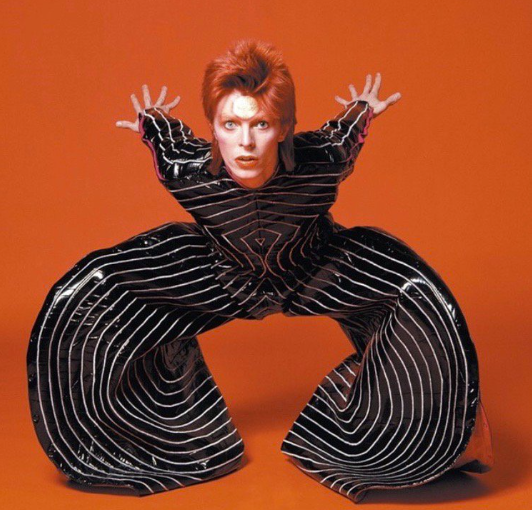
Then, in 1972 and 1973, at the exact moment he finally had leverage of his own, he spent most of it on other people.
Lou Reed. Bowie co-produced Transformer with Mick Ronson in 1972 — the record that gave Reed the only significant hit of his career and kept the Velvet Underground idea alive commercially at the moment it might have disappeared.
The Stooges. Iggy Pop produced and mixed Raw Power himself, and made a mess of it: most of the instruments on one channel, vocals on the other, the balance unusable. Columbia refused to release it. Bowie remixed seven of the album's eight tracks in a single day at Western Sound Recorders in Los Angeles in October 1972, working on dated equipment against the clock. Iggy remembered him listening "with his ear to each thing," and getting what Iggy called "a beautiful guitar echo overload." Purists have complained about that mix for fifty years — though when Iggy remixed the record himself in 1996 at enormous volume, both James Williamson and Ron Asheton said they preferred Bowie's. Raw Power peaked at 183 in America and became one of the foundation documents of punk. Johnny Marr is among the guitarists who have cited it.
Mott the Hoople. In early 1972 Bowie sent them a demo of "Suffragette City," hoping they would record it. In late March their bassist Pete Watts wrote back to decline, and mentioned that the band were breaking up. Bowie replied within two hours: "I've written a song for you since we spoke, which could be great." He played it to them sitting cross-legged on the floor of an office on Regent Street. Ian Hunter: "I knew straight away it was a hit. There were chills going down my spine." Their drummer Dale Griffin: "We couldn't believe it… You couldn't fail to see it was a great song."
"All the Young Dudes" reached number three. The band did not break up.
There is a small footnote to that which this archive can now close. Dale Griffin — the drummer whose band Bowie rescued — later became a BBC session producer, and in November 1981 he sat behind the desk at Maida Vale for the first John Peel session by four schoolboys from Sheffield called Pulp, whose drummer had built an electronic drum out of a burglar alarm pressure mat and a pocket calculator. Griffin, by all accounts, did not enjoy it.
Killing it
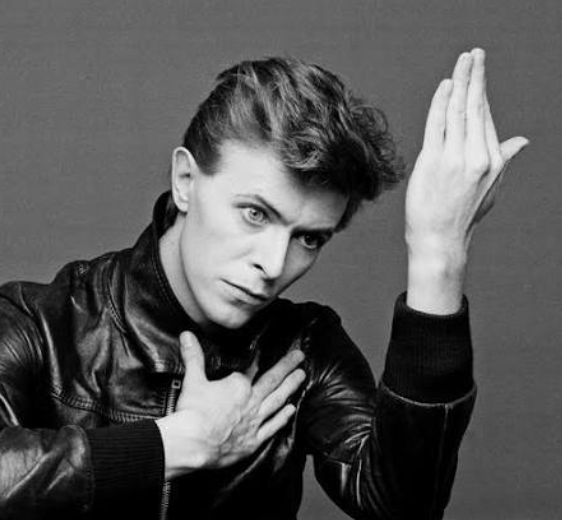
On 3 July 1973, on stage at the Hammersmith Odeon, Bowie announced his retirement — not his own, as it turned out, but Ziggy Stardust's. He killed the character at the height of its commercial success, in public, without warning most of his own band.
British independent music took a specific lesson from that, and it wasn't about theatre. It was that you are allowed to stop. You can end the thing that is working. The Smiths did it. The Wedding Present did it and came back. Pulp did it twice. The idea that a band is not a job you are obliged to keep doing enters British music largely through this moment.
Berlin
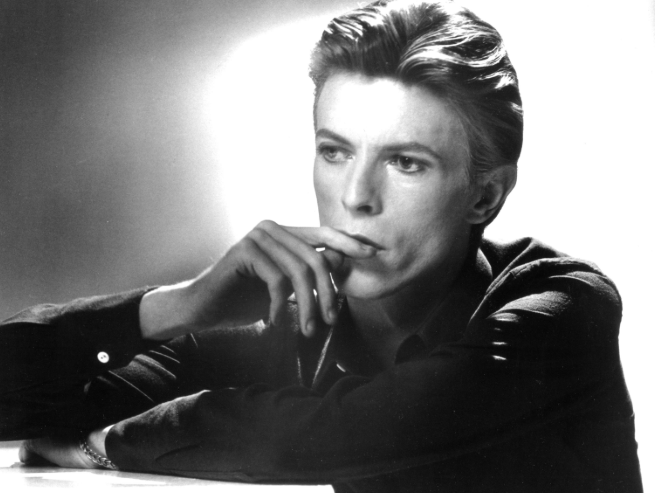
Between 1977 and 1979, working with Brian Eno, Bowie made Low, "Heroes" and Lodger — cold, largely instrumental in places, closer to European electronic music than to rock.
Four young men in Manchester were paying attention. When they formed, they named themselves Warsaw, after "Warszawa," the long instrumental at the centre of Low. They later changed the name to Joy Division.
You can hear the rest of it across the next decade: the flat affect, the space, the synthesiser treated as an instrument of atmosphere rather than novelty. Half of what got called post-punk is Low with guitars.
What was actually inherited
Not the costumes. Almost nobody in British indie dressed like Bowie; the Smiths and the Wedding Present looked like men who had got dressed in the dark, which was rather the point.
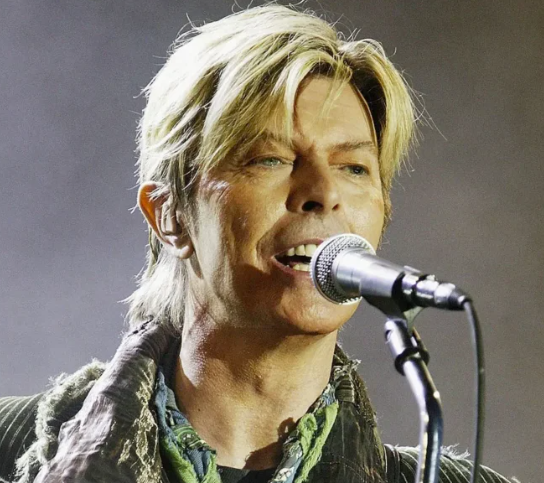
What came down was permission. Permission to be visibly odd on national television. Permission to build a self rather than express one. Permission to change completely between records. Permission to stop. And — underneath all of it, from a man who spent ten years releasing failures — permission to keep going when nothing is working, on the grounds that the thing that eventually works may look nothing like what you are doing now.
Blackstar was released on 8 January 2016. Bowie died two days later.
Sources
Bowie spent a decade failing before any of it worked. That may be the most useful thing about him.