The indie4me long read
THE VOICE WITHOUT WORDS: HOW COCTEAU TWINS INVENTED A NEW LANGUAGE
From industrial Grangemouth to Heaven or Las Vegas: how Elizabeth Fraser, Robin Guthrie and Simon Raymonde invented a new emotional language for pop.
Words by Michele Harding · 18 September 2026
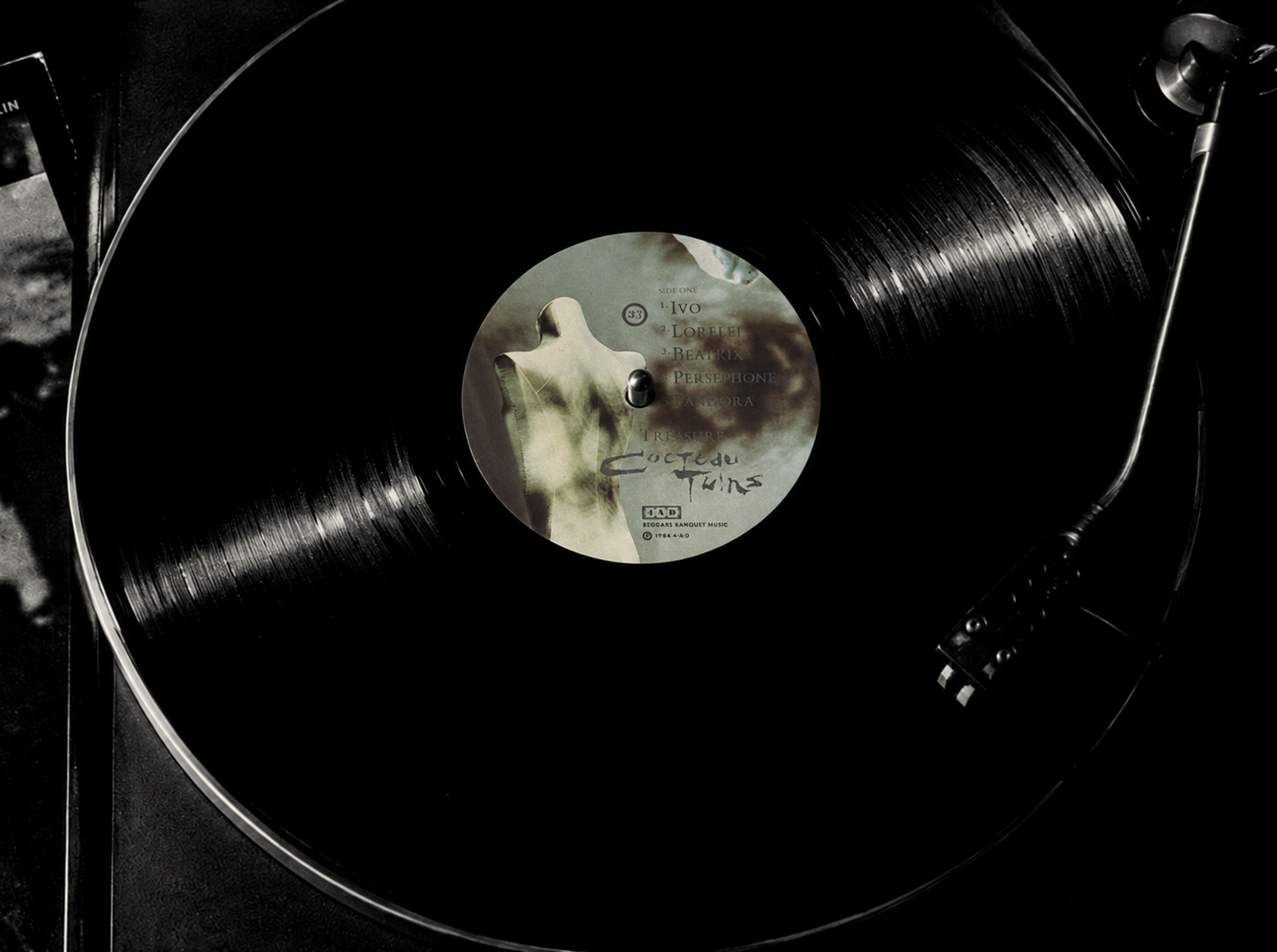
Before Cocteau Twins sounded like light breaking through stained glass, they came from a town of refineries, chimneys and soot. Grangemouth sits between Glasgow and Edinburgh on the Firth of Forth, its skyline long defined by heavy industry. It is an unlikely birthplace for music routinely described as celestial. That contrast matters. Cocteau Twins did not float into existence from some imagined dreamscape; they were working-class Scottish teenagers looking for a way out.
Robin Guthrie and his school friend Will Heggie began the group at the end of the 1970s. Elizabeth Fraser joined after they saw her dancing at a local disco where Guthrie was the DJ. The invitation was based less on an audition than an instinct: anyone who moved like that might be able to sing. Fraser had grown up around records and family music, but she had no conventional plan to become a frontwoman. The three were outsiders in a small town, drawn to punk not as a fixed sound but as permission — the idea that they could make something before anybody declared them qualified.
Their name was borrowed indirectly from Simple Minds. An early version of that band’s song “No Cure” had been called “Cocteau Twins”; the reference to French artist Jean Cocteau was therefore second-hand, despite decades of assumptions that Guthrie’s group had chosen it as an art-school declaration. It is an early example of a pattern that would follow them: listeners finding grand designs where the musicians themselves described accidents, impulses and sounds that simply felt right.
THE TAPE ABOVE THE RECORD SHOP
In 1981, Guthrie and Fraser travelled south with a demo for 4AD founder Ivo Watts-Russell. The label’s office sat above the Beggars Banquet record shop in Earl’s Court. A teenage shop worker accepted the cassette from the equally young Scottish visitors. His name was Simon Raymonde. Neither side knew that Raymonde would later become the third point of the group’s definitive line-up.
The demo was hardly a pristine showcase. Guthrie later recalled that Watts-Russell could barely hear Fraser on it; her voice became an unexpected revelation when he encountered the band properly. 4AD nevertheless heard enough to invite them into the studio. Garlands arrived in July 1982, made by Fraser, Guthrie and Heggie in six days at Blackwing Studios in London. It was severe, physical music: drum machine rhythms, Heggie’s bass and Guthrie’s guitar forming a metallic fog around a voice already refusing the usual duties of rock singing.
The debut did not yet possess the radiance for which Cocteau Twins became known. Its beauty had sharp edges. “Wax and Wane” made John Peel’s 1982 Festive Fifty, confirming how quickly this unknown group from central Scotland had found the ears that mattered in independent music. Their progress was astonishingly fast, but it was not the result of a career plan. They had wanted to make a record. Suddenly, there was a second one to make.
Heggie left in 1983 after Garlands and the Lullabies and Peppermint Pig EPs. Fraser and Guthrie continued as a duo, homeless for a period after giving up their flat to afford touring. They made Head Over Heels while staying with friends and recording in Edinburgh. Released in October 1983, it was 4AD’s first number one on the UK independent album chart. With the bass removed, space opened. Guthrie filled it with guitars that chimed, surged and dissolved; Fraser began shaping a vocal language whose meaning lived as much in sound as in vocabulary.
THE THIRD PERSON IN THE ROOM
Simon Raymonde joined at the end of 1983. He had known the pair casually through the record shop and offered them access to a small Camden studio while its owner was away. What began as a friendly favour turned into an unplanned writing session. Raymonde’s melodic bass, piano and instinct for arrangement gave the music weight without pinning it to the ground.
The renewed trio announced itself with The Spangle Maker EP in 1984. Its centrepiece, “Pearly-Dewdrops’ Drops”, reached number 29 in the UK — the highest singles-chart position of the band’s career. The statistic is revealing. Cocteau Twins became enormously influential without ever having a conventional Top 20 hit. Their reach grew through John Peel broadcasts, independent record shops, word of mouth and the private evangelism that happens when a listener presses a record into a friend’s hands and insists: you have to hear this.
Treasure followed in October 1984. Its song titles — “Lorelei”, “Persephone”, “Pandora”, “Aloysius” — seemed to offer a mythology, although Fraser later said she had not intended one. The record is where the familiar Cocteau Twins elements locked together: Raymonde’s anchoring low end, Guthrie’s layers of treated guitar and Fraser’s multitracked voice turning syllables into melody, percussion and atmosphere. Yet the album’s apparent timelessness was built with very contemporary early-digital technology. Guthrie himself later heard that technology as dating the record, a useful corrective to the tendency to treat the band’s work as supernatural rather than constructed.
A VOICE THAT MEANT BEFORE IT EXPLAINED
Fraser’s singing remains the point at which description usually fails. She could move from a low, intimate murmur to a high peal in a single phrase, stacking harmonies until one human voice became a choir. The words might be English, fragments gathered from books and dictionaries, private associations, invented sounds, or all of these at once. For “Whales Tails” on Victorialand, she described assembling words from languages she did not understand and discovering their meaning only when she sang them.
Calling the result “nonsense” misses the method. Fraser was not removing meaning so much as refusing to confine it. A hard consonant could strike like percussion; an open vowel could carry grief or joy before the listener decoded a sentence. Her voice did not sit on top of the music. It moved through it — another current in a sound that seemed to glow from within.
There was self-protection in the method too. Fraser later called the obscured language a life-preserver. As the band entered the 1990s and her relationship with Guthrie fractured, the words became more intelligible. That change makes Four-Calendar Café especially exposed: after years in which listeners supplied their own meanings, Fraser began allowing the songs to state more plainly what hurt.
GUITAR WITHOUT THE GUITAR HERO
Guthrie approached the guitar with a parallel disregard for its accepted role. He was less interested in riffs or solos than in what happened after the string was struck. Effects, delays, reverberation, studio processing and layers became the instrument. His aim, he has said, was to combine punk’s energy with finesse, beauty and the density of Phil Spector.
The crucial point is that the shimmer was not a wash thrown over completed songs. Cocteau Twins composed through recording. A drum-machine pattern, a bass movement, a processed guitar tone and a vocal response accumulated until a song appeared. They generally did not arrive with demos in the conventional sense. Writing, performing, engineering and mixing were parts of one continuous act. The studio was not where the band documented its music; it was where the music came into being.
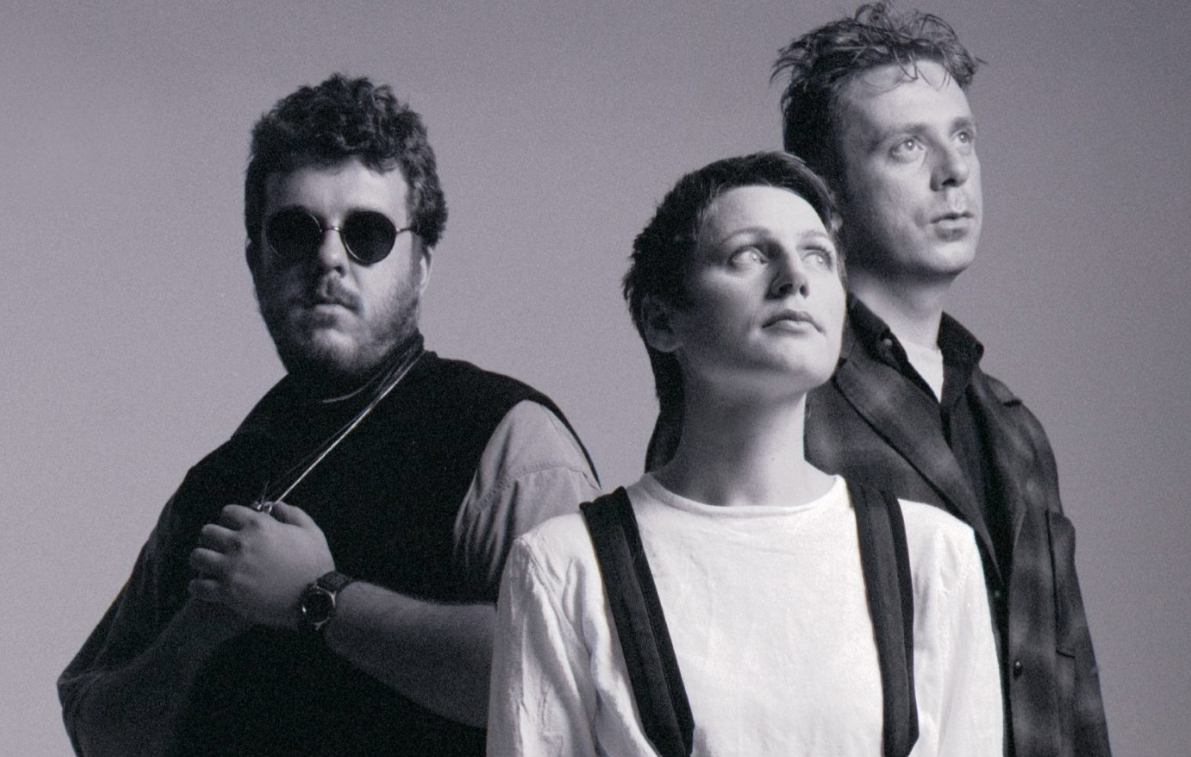
That process explains why imitators can reproduce the surface — chorus, delay, a breathy vocal — and still miss the centre. Guthrie’s textures were detailed and rhythmic. Raymonde’s parts supplied motion and counter-melody. Fraser responded emotionally to an environment still being built around her. The records feel spontaneous because, beneath the painstaking production, discovery remains audible.
EXPANSION WITHOUT DILUTION
Victorialand, recorded by Fraser and Guthrie without Raymonde while he was occupied with This Mortal Coil, reached number 10 in the UK in 1986. Its reduced instrumentation made the music feel almost weightless. That same year, the trio collaborated with American pianist and composer Harold Budd on The Moon and the Melodies. Originally prompted by a television project that fell away, the album continued because the musicians liked one another and wanted to see what would happen. “Sea, Swallow Me” has since become one of the most widely heard recordings associated with the group.
The members’ work around 4AD widened their footprint further. Fraser and Guthrie’s version of Tim Buckley’s “Song to the Siren” for This Mortal Coil in 1983 became a defining performance in its own right: a nearly bare arrangement in which Guthrie’s guitar gives Fraser’s vocal nowhere to hide. Guthrie produced artists including Dif Juz, The Gun Club, Felt and A.R. Kane; Fraser appeared on Felt’s “Primitive Painters” and Ian McCulloch’s “Candleland”. Their sound was distinctive, but their curiosity kept it connected to a wider independent culture.
Blue Bell Knoll in 1988 was the first Cocteau Twins album released by Capitol in the United States. By then, the group had moved from the stark pressure of Garlands to music of extraordinary colour, but the architecture remained recognisable. Electronic rhythm, melodic bass and guitars altered almost beyond identification formed a space in which Fraser could sound intimate and immense at once.
HEAVEN, LAS VEGAS AND THE COST OF BEAUTY
Heaven or Las Vegas, released on 17 September 1990, is the record on which their experiments became direct without becoming ordinary. “Iceblink Luck” moves with pop-song momentum; “Cherry-coloured Funk” seems to breathe; the title track turns a phrase that is only partly graspable into an unforgettable chorus. The album reached number seven in the UK, their highest album placing, and remains their commercial peak.
Its brightness concealed a difficult moment. Fraser and Guthrie had recently become parents to Lucy Belle. Raymonde’s father, the composer and arranger Ivor Raymonde, died during the period in which the record was made. Guthrie was struggling with addiction, and his relationship with Fraser was under severe pressure. Their September Sound studio — named for their daughter’s birth month — gave the band control over its working environment, but privacy could not remove what each member carried into the room.
The record’s achievement is not that suffering magically produced beauty. That romantic story is too easy. Its achievement is that three musicians, under strain, made the most focused version of a language they had spent a decade developing. After the mixing was finished, Guthrie remembered playing the album to friends and watching them sit silently through all 40 minutes. For a group that distrusted explanations, the reaction was the explanation.
THE END OF THE PRIVATE WORLD
After leaving 4AD, Cocteau Twins released Four-Calendar Café in 1993 and Milk & Kisses in 1996 through Fontana/Mercury and Capitol. Fraser and Guthrie’s personal relationship ended, but the trio continued working. Milk & Kisses was made quickly and, by their standards, separately: members often recorded at different times. Its title came from a friend telling Fraser that they wished they could remove the poison she was feeling and replace it with “milk and kisses”.
The band broke up in 1997 while attempting a ninth album. The official archive is clear that no reunion is planned. One was announced for Coachella and a subsequent tour in 2005, but Fraser withdrew and it never happened. The cancellation disappointed listeners, yet it also resists the tidy ending demanded by the reunion industry. Some relationships cannot be made safe by distance, money or applause.
WHAT THEY LEFT IN THE AIR
Cocteau Twins are regularly placed at the source of dream pop and in the prehistory of shoegaze. The influence is audible in bands such as Slowdive and Lush, and in later artists who learned that atmosphere could carry a song without weakening it. But the deeper legacy is broader than a guitar sound. They demonstrated that emotional precision does not always require verbal clarity; that studio technology can be expressive rather than merely polished; and that a regional independent band can build an international audience without simplifying its instincts.
The catalogue contains eight studio albums and more than 140 songs recorded between 1982 and 1996. Its journey runs from the abrasive monochrome of Garlands through the ornate rush of Treasure and the open skies of Victorialand to the saturated pop of Heaven or Las Vegas. The records do not sound identical, but they belong unmistakably to the same private grammar.
Perhaps that is why the music continues to feel newly discovered. Cocteau Twins gave listeners enough form to enter and enough mystery to remain. The words bend, the guitars lose their edges, the rhythm holds. What begins in industrial noise ends somewhere language cannot quite reach.
RESEARCH NOTES AND SOURCES
This feature was researched from the official Cocteau Twins archive and discography; 4AD’s artist history and release catalogue; the Official Charts Company’s Cocteau Twins chart record; Dave Simpson’s 2009 interview with Elizabeth Fraser in The Guardian; and archived interviews with Fraser, Guthrie and Raymonde published by The Word, Mix, The Scotsman, Guitar.com and Penny Black Music. Key source pages: cocteautwins.com/introduction.html; cocteautwins.com/discography/; cocteautwins.com/cocteau-twins-faq.html; shopusa.4ad.com/pages/artists/cocteau-twins; officialcharts.com/artist/21229/cocteau-twins/; theguardian.com/music/2009/nov/26/cocteau-twins-elizabeth-fraser-interview.
The voice did not sit on top of the music. It moved through it — another current in a sound that seemed to glow from within.